A page has turned at Hever Castle, revealing a Tudor symbol with a fascinating connection to Anne Boleyn and her daughter, Elizabeth I.
There is something rather lovely about discovering a new detail when you visit an exhibition – particularly when that detail has been sitting there all along, just waiting to be revealed.
Visitors to Capturing a Queen: The Image of Anne Boleyn at Hever Castle will notice a change to the Ecclesiastes manuscript on display in the exhibition. Until now, the manuscript has been open at the page featuring an image of Anne Boleyn’s astrolabe. The page has now been turned, revealing a striking falcon emblem – another powerful symbol associated with Anne Boleyn and one with a fascinating connection to her daughter, Elizabeth I.
And the timing could hardly be more appropriate.
The falcon is closely associated with Anne Boleyn and became one of the most recognisable symbols connected with her. Used as her personal badge, it was an important part of Anne’s visual identity and appeared in the imagery surrounding her during her rise to become Queen of England.
Now, almost 500 years later, the falcon has been revealed once again – this time as part of an exhibition exploring the way Anne’s image has been created, remembered and reinterpreted over the centuries.
The story of the falcon did not end with Anne.
Elizabeth I adopted her mother’s falcon, carrying the symbol into her own reign and giving it a new chapter in its story. The connection between the two queens is particularly poignant given Elizabeth’s age when Anne was executed. She was just two years old, yet her mother’s influence and legacy would remain an important part of Elizabeth’s story.
The falcon therefore offers visitors another way of thinking about the relationship between Anne and Elizabeth – not simply as mother and daughter, but as two hugely significant Tudor women whose stories became intertwined in the years that followed.
The newly revealed page is particularly timely as 7th September 2026 marks the 493rd anniversary of Elizabeth I’s birth. Born in 1533, Anne Boleyn’s daughter would go on to become one of England’s most celebrated monarchs, reigning for almost 45 years.
The falcon’s appearance in the manuscript offers a fitting reminder of the connection between mother and daughter, and the lasting legacy of Anne Boleyn’s imagery.The restoration has involved carefully working on the drawbridge mechanisms, allowing the bridge to rise once again after more than a decade.
Capturing a Queen: The Image of Anne Boleyn explores the many different ways Anne has been portrayed over almost five centuries. Bringing together portraits, objects and historic material, the exhibition looks beyond the familiar image of Anne as Henry VIII’s second wife and explores how her identity and reputation have continued to evolve.
At the heart of the exhibition is the opportunity to see Anne in a different light – through the objects, symbols and images that help tell her story.
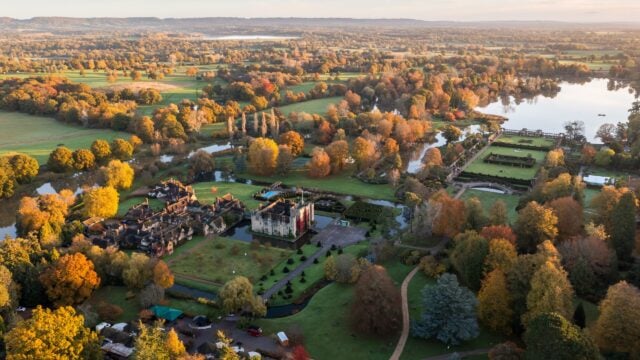
The setting makes that story particularly special. Hever Castle was Anne Boleyn’s childhood home, and it was here that she spent much of her early life before going on to become one of the most famous women in Tudor history.
Now, visitors can discover another piece of that story.
So, when you visit Capturing a Queen, take a moment to look closely at the Ecclesiastes manuscript in the Book of Hours room. The page has turned and Anne Boleyn’s falcon has been revealed.
It is a small change to the display, but one which opens up another fascinating connection between Anne Boleyn and her daughter, Elizabeth I and another reason to look a little more closely at the story behind the image of a queen.
The manuscript will remain open at the falcon page for around three months, giving visitors plenty of opportunity to see the newly revealed image during their visit to Capturing a Queen.
For those who have already seen the exhibition, it also offers a reason to come back and take another look.
Want to discover more of Anne Boleyn’s story after your visit? The Capturing a Queen range in the Hever Castle Shop includes the official exhibition catalogue, postcards, prints, gifts and other keepsakes inspired by the exhibition and its fascinating collection of portraits, objects and imagery.
There is also now a 35-minute virtual tour of Capturing a Queen available to purchase, offering the chance to step inside the exhibition from home and discover its highlights wherever you are. It’s perfect for anyone unable to visit Hever Castle in person, or for those who have already visited and want to experience the exhibition again.
The exhibition range is available for a limited time, while stocks last. Explore the Capturing a Queen collection in the Hever Castle Online Shop, including the new virtual tour.

Book your visit to Hever Castle & Gardens.
Within the grounds of the Hever Castle Estate, there are two opportunities for you to stay the night with us.
Hever Castle has played host to many important events and celebrations for over 600 years. In 1903 when William Waldorf Astor set about restoring Hever Castle to its former glory, he added the Astor Wing, to accommodate his family and guests, before creating a lake and the spectacular Italian Garden to house his impressive collection of ancient Greek and Roman statuary.
There are multiple places to eat & drink across the Hever Castle Estate. Select between the Castle & Gardens and Golf Club below to discover more.
Set in the mature grounds of the Hever Castle Estate, Hever Castle Golf Club is a 27 hole Kent golf course that will encourage and inspire all golf enthusiasts.
Set in the mature grounds of the Hever Castle Estate, the Wellbeing Centre consists of five smart treatment rooms.