Hever Castle’s Council Chamber is currently closed to visitors and will reopen for its major new exhibition in February, Capturing a Queen: The Image of Anne Boleyn.
The exhibition, a world first, seeks to answer the intriguing question of what Anne Boleyn actually looked like: a topic which has been debated by historians for centuries.
Capturing a Queen will bring together many portraits and images, from different periods of history, which at one point have all been labelled as depicting Anne.
The Council Chamber will play its part in the exhibition by hosting a fascinating display of costumes from film and television productions. The room will also host various other items of Anne Boleyn-related ephemera, demonstrating the many different ways in which Anne has been re-imagined in popular history.
Capturing a Queen will open to the public on 11 February and will run for nearly a year, finishing on 1 January 2027.
Previously, visitors to the Council Chamber were given a glimpse into some of the dark and deadly aspects of history. The room contained a unique collection of punishment and torture instruments, which had been acquired by Hever Castle’s former owner William Waldorf Astor.
Many of these items had previously been owned by renowned collector Christian Hammer (1818-1905), and were purchased by Lord Astor at auction in Stockholm. Lord Astor’s prime interest was in collecting historic suits of armour, as well as swords, spears, pikes and horse armour.
These items have now gone into temporary storage, for the duration of the exhibition. Those who enjoy investigating the horrific side of history, however, need not despair: the collection will be on display at Hever Castle once more the year after next.
The specialist cleaning of items such as armour, before placing them into storage, is being led by Hever Castle Curator Alison Palmer (pictured). Alison and her team are wearing gloves and using Renaissance Metal De-Corroder to restore the armour to display condition, but in the process she has made a grim discovery of her own.
“Some of the items show the damaging effects, on precious artefacts, of touching by inquisitive human hands,” Alison said. “In one example, oil from fingers has led to rust developing on the right leg of a display set of full jousting armour.
“My message to visitors is please don’t touch metal items in a museum or historic house, as over the years even a small touch can lead to long-term damage.”

Book your visit to Hever Castle & Gardens.
Within the grounds of the Hever Castle Estate, there are two opportunities for you to stay the night with us.
Hever Castle has played host to many important events and celebrations for over 600 years. In 1903 when William Waldorf Astor set about restoring Hever Castle to its former glory, he added the Astor Wing, to accommodate his family and guests, before creating a lake and the spectacular Italian Garden to house his impressive collection of ancient Greek and Roman statuary.
There are multiple places to eat & drink across the Hever Castle Estate. Select between the Castle & Gardens and Golf Club below to discover more.
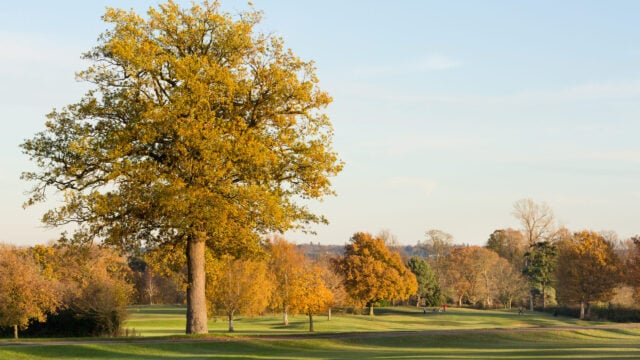
Set in the mature grounds of the Hever Castle Estate, Hever Castle Golf Club is a 27 hole Kent golf course that will encourage and inspire all golf enthusiasts.
Set in the mature grounds of the Hever Castle Estate, the Wellbeing Centre consists of five smart treatment rooms.